Weight Loss vs Muscle Loss: The GLP-1 Problem Nobody Talks About
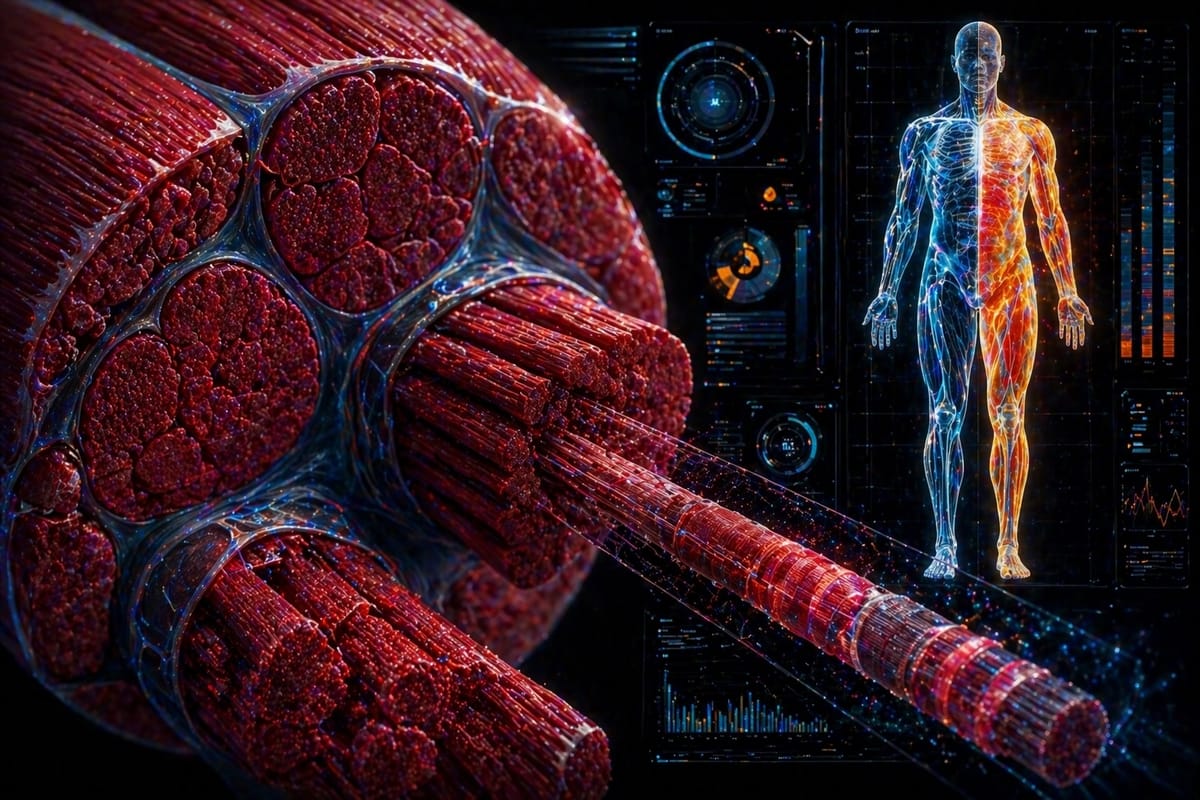
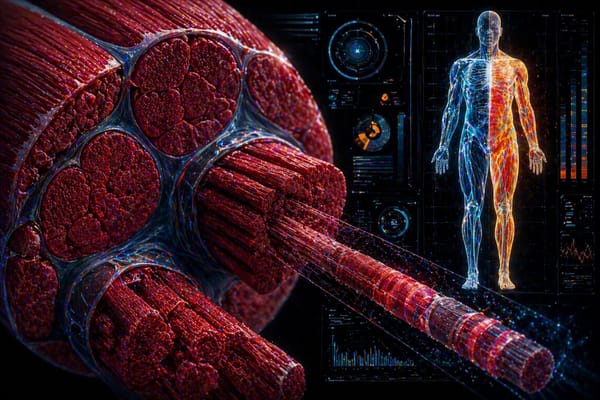
The most common misconception about GLP-1 drugs is that losing weight on them constitutes a successful longevity outcome. It does not, necessarily. What you lose matters as much as how much you lose. And the data on GLP-1 drugs without adjunctive muscle preservation strategies is consistent: a substantial portion of the weight lost is lean mass, including muscle, bone mineral density, and metabolically active tissue.
This is not a reason to avoid GLP-1 drugs. It is a reason to use them within a protocol that specifically addresses body composition, not just body weight. This post connects to the GLP-1 longevity overview GLP-1s and Longevity and the insulin resistance discussion Why Insulin Resistance May Accelerate Aging.
Why Body Composition Matters More Than Weight
In the context of longevity, muscle mass is functional and prognostic, not cosmetic:
- Skeletal muscle is the largest insulin-sensitive tissue in the body. More muscle means better glucose disposal, lower insulin resistance, and reduced metabolic risk.
- Muscle strength and mass are among the strongest independent predictors of all-cause mortality in aging populations, regardless of body weight.
- Sarcopenia, age-related muscle loss, is independently associated with cardiovascular events, cognitive decline, falls, fractures, and loss of functional independence.
- Lean mass supports bone density. Fat loss without muscle preservation accelerates bone mineral loss, particularly significant in women approaching menopause.
An executive who is 30 pounds lighter is not automatically healthier. An executive with better body composition, more muscle relative to fat, improved metabolic markers, and maintained bone density is.
The Scale Does Not Tell You What You Lost
A GLP-1 drug that produces 15% body weight loss sounds like a strong outcome. But if 35-40% of that lost weight is lean mass, which is consistent with data from trials where no resistance training protocol was included, the metabolic picture is more complex than the scale suggests.
The STEP trial data for semaglutide and SURMOUNT data for tirzepatide both show meaningful lean mass loss alongside fat loss in participants who did not engage in structured resistance training. The ratio of fat mass to lean mass lost varies with the individual and the protocol, but the pattern is consistent: without active countermeasures, lean mass loss is a predictable component of GLP-1-induced weight reduction.
The more aggressive the caloric deficit the drug produces, the greater the lean mass risk in the absence of specific preservation strategies.
The Longevity Math
An executive at 52 who loses 28 pounds over six months has a compelling story. But if DEXA shows 9 pounds of that loss was lean mass, VO2 max has declined by 4 ml/kg/min, and grip strength has fallen 15%, the longevity profile has not improved proportionally to the scale change. In some cases it has worsened.
In the scenario where the drug is discontinued without supporting lifestyle changes, which occurs in a majority of patients, weight regain is preferentially fat. The net outcome is a body composition worse than before the drug was started: less muscle, more fat, potentially lower bone density.
This is not a failure of the drug. It is a failure of the protocol around the drug.
What a Muscle-Preserving Protocol Looks Like
The interventions that preserve and build lean mass during GLP-1 therapy are well characterized. They are not complicated, but they require intentional inclusion:
Adequate protein intake
The appetite-suppressing effect of GLP-1 drugs reduces total caloric intake, but protein targets should not be reduced proportionally. A minimum of 1.6 grams of protein per kilogram of body weight per day is a reasonable floor for lean mass preservation during active caloric restriction. For individuals over 60, this target may be higher due to age-related changes in protein synthesis efficiency.
Progressive resistance training
Mechanical loading is the primary stimulus for muscle protein synthesis. A structured resistance training program during GLP-1 therapy is not an optional lifestyle suggestion in a longevity context. It is the mechanism by which the drug's metabolic benefits are amplified rather than partially offset. Two to three sessions per week of compound resistance movements is the minimum effective dose.
DEXA monitoring
Body weight alone does not differentiate fat loss from muscle loss. Regular DEXA scans allow tracking of fat mass, lean mass, and bone density as separate variables. This is how you know whether the protocol is producing the intended outcome. Without DEXA, you are navigating by scale weight, which is inadequate information.
Consideration of additional anabolic support
Depending on the individual's hormonal profile, baseline muscle mass, age, and training response, additional support may be appropriate. In men with documented hypogonadism, testosterone optimization is a clinically established component of body composition management. Other anabolic-supportive strategies require physician evaluation and individualization.
The Diab Approach to GLP-1 Therapy
GLP-1 therapy at Diab Longevity is part of the PERFORMANCE track (metabolic yield optimization). It is never prescribed as a standalone weight-loss intervention. Every protocol includes:
- Baseline DEXA scan and complete metabolic panel before drug initiation
- Protein and resistance training targets established alongside the drug protocol
- Quarterly DiabOS tracking of lean mass, fat mass, VO2 max, and metabolic markers
- Drug dosing adjusted in response to body composition data, not just weight loss rate
The goal is not a lower number on the scale. The goal is a better metabolic and structural asset profile at the end of the protocol than at the beginning.
Start Your Optimization Review.
*Medical disclaimer: This content is educational and does not constitute medical advice. All protocols are individualized and supervised by a licensed physician.*